
How to Automate Checkout and Cleaner Reminders for Your Short-Stay Business
Learn how automated checkout and cleaner reminders can help Kenyan Airbnb and short-stay hosts reduce follow-ups and keep units ready for the next guest.

Running a short-stay business involves a lot of small reminders.
A guest needs to remember checkout time.
The host needs to know when the guest is leaving.
The cleaner needs to know when the unit is available.
The next guest needs the unit ready before they arrive.
When you have one booking this is easy.
When several guests are checking in and out every week it becomes a constant stream of WhatsApp messages and phone calls.
This is where automation can save a host a lot of time.
The problem with manual reminders
Imagine you have six units.
Tomorrow:
- Two guests check in.
- Three guests check out.
- Two units need cleaning.
- One cleaner is handling multiple apartments.
You now need to remember who should receive each message.
You might send a WhatsApp message to one guest and forget another.
You might remind the cleaner but forget to tell them which unit needs to be ready first.
You might call a guest who already received the checkout instructions.
None of this is difficult.
It is simply repetitive.
What should a checkout reminder contain?
A checkout reminder should be simple.
The guest needs to know:
- Checkout time
- Any checkout instructions
- Who to contact if they need help
For example:
Hi Jane, just a reminder that checkout from Amaziah Apartment is tomorrow at 11:00 AM. Please follow the checkout instructions provided and contact your host if you need any assistance.
There is no reason for a host to type this manually every time.
Hosts need reminders too
The guest is not the only person who needs a reminder.
The host should know when a guest is leaving.
For example:
Hi Belinda, Jane checks out of Amaziah Apartment tomorrow at 11:00 AM.
That gives the host time to prepare for cleaning and the next reservation.
Cleaners need a different message
A cleaner does not need the same message as a guest.
They need an actionable reminder.
For example:
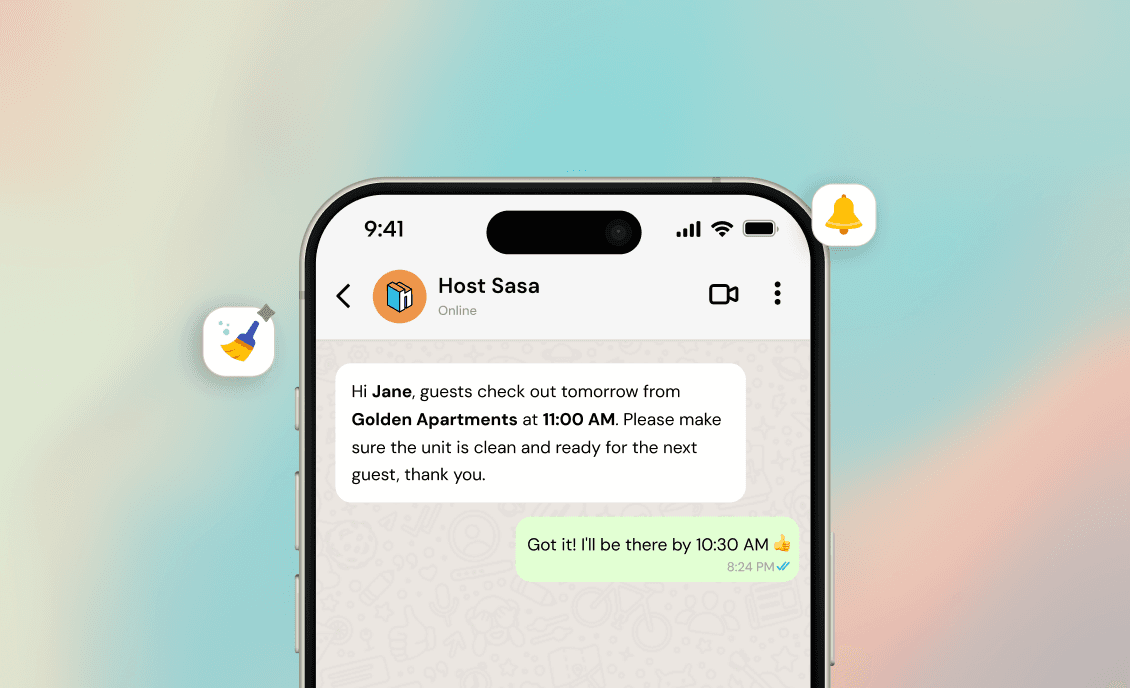
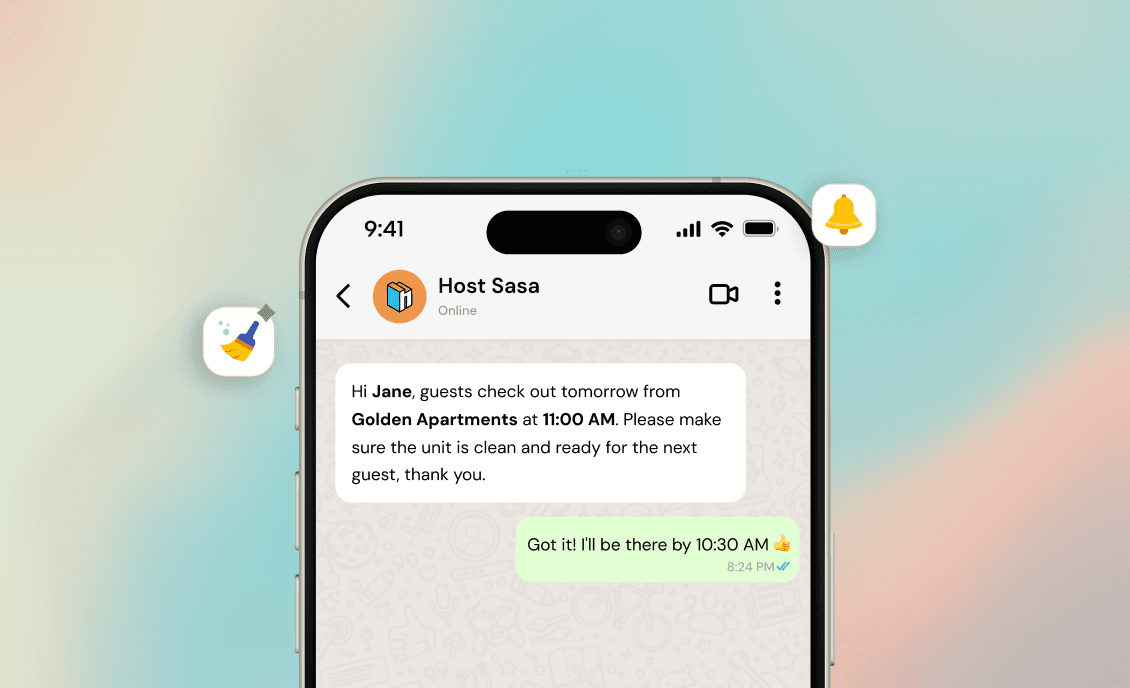
Hi Beth, guests check out of Amaziah Apartment tomorrow at 11:00 AM. Please make sure the unit is cleaned and ready for the next guest.
The message is short because the cleaner needs the important information quickly.
Why WhatsApp automation works well for short stays
WhatsApp is already part of how many Kenyan hosts communicate with guests and their teams.
That makes it a useful channel for operational reminders.
You do not need to ask a cleaner to download a separate app just to receive a cleaning reminder.
You do not need to call every guest before checkout.
The message can be sent automatically based on the booking information.
Automation should start with the booking
The important part is connecting the reminder to the reservation.
For example:
Booking
Check-in: 15 September
Checkout: 18 September
The system knows the guest leaves on 18 September.
It can then trigger the appropriate reminders without the host creating them manually.
This is much more reliable than keeping a separate reminder list.
A simple automated workflow
A short-stay operation could follow this flow:
Before check-in - Host
The guest receives their reservation confirmation and check-in information.
Before checkout - Guest
The guest receives a checkout reminder.
Before checkout - Host
The host receives a reminder that the guest is leaving.
Around checkout - Cleaning
The cleaner receives a reminder to prepare the unit.
After cleaning
The host can be notified that the unit is ready.
This creates a simple chain from one booking to the next.
Automation reduces unnecessary calls
Hosts often spend time calling guests about things that could have been communicated automatically.
"Remember checkout is at 10."
"What time are you leaving?"
"The cleaner needs to come."
"Please let us know when you have checked out."
These messages may only take a minute each.
Multiply that across dozens of bookings and the time adds up.
Automating these reminders lets the host focus on the things that actually require their attention.
Automation also helps cleaners
Cleaners often work around guest schedules.
They need to know when a unit becomes available.
They also need enough time to prepare it before the next guest arrives.
A reminder with the property and timing gives them a clear task.
Instead of:
"Are there any apartments that need cleaning today?"
They can receive:
"Hi Beth, guests check out of 11:00 AM at 11:00 AM today. Please clean and prepare the unit before the next guest arrives at 2:00 PM."
That is much easier to act on.
Good automation should still feel personal
Automation does not mean sending robotic messages.
The message should include the information relevant to the person receiving it.
A guest should see their name and property.
A cleaner should see their name and cleaning assignment.
A host should see the property and booking details.
The message can still sound like something a person would send.
Do not automate everything
Some conversations still need a human.
A guest asking for directions may need a personal response.
A guest reporting a problem needs someone to handle it.
A host may need to approve a booking.
A cleaner may need to report that something is damaged.
Automation should handle repetitive reminders.
People should handle situations that need judgement.
A better short-stay operation
The goal is not to remove the host from the business.
It is to remove unnecessary work.
When bookings are organised and reminders are automated you spend less time checking calendars and sending repetitive messages.
You can see your upcoming check-ins.
You can see your upcoming checkouts.
Your cleaner knows when a unit needs attention.
Your guests receive important reminders.
And you can focus on running the business.
Host Sasa automates the routine work
Host Sasa connects your bookings with the day-to-day work that follows them.
Hosts can manage reservations from one dashboard and automate checkout reminders for guests, hosts and cleaners through WhatsApp.
That means fewer manual follow-ups and a clearer schedule for everyone involved.
For a host managing several short-stay units the small automations matter.
A reminder sent at the right time can prevent a missed checkout.
A cleaner notification can make sure a unit is ready.
A booking record can prevent a double booking.
Together these small improvements create a much easier way to run a short-stay business.
More Articles
Managing Airbnb and Short-Stay Bookings From WhatsApp: A Better Way for Kenyan Hosts
Learn how Kenyan Airbnb and short-stay hosts can organise bookings from WhatsApp, Instagram, Facebook and TikTok without losing track of reservations.
August 15, 2026
How to Avoid Double Bookings When Managing Multiple Short-Stay Units
Learn how to prevent double bookings when reservations come through WhatsApp, Instagram, Facebook, TikTok and direct booking websites.
July 28, 2026