
How to Create a Direct Booking Website for Your Short-Stay Business in Kenya
Learn how a direct booking website can help Kenyan Airbnb and short-stay hosts showcase their units, receive reservations and reduce reliance on social media conversations.

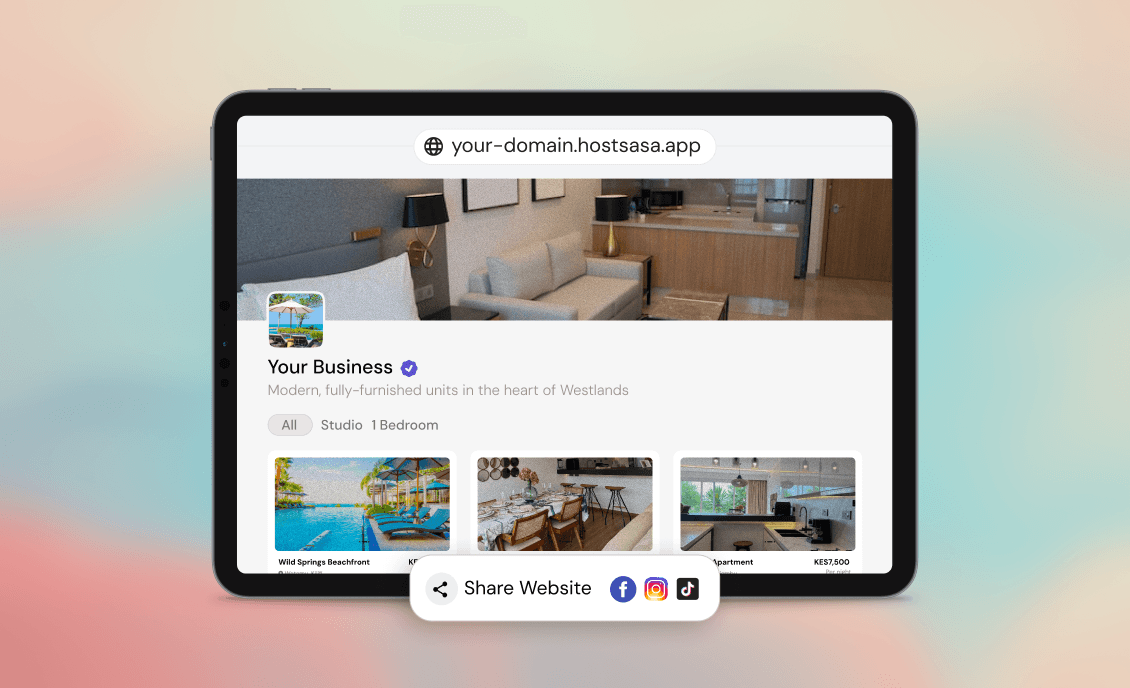
If you run a short-stay apartment in Kenya your Instagram page may be doing more work than your website.
A guest sees your apartment on Instagram.
They send you a DM.
You send photos.
They ask about the price.
You check whether the dates are available.
They ask for your location.
You answer again.
Then they ask how to book.
This works but it takes time.
A direct booking website gives your guests a place where they can find the information they need and request a reservation themselves.
What is a direct booking website?
A direct booking website is a website where guests can browse your accommodation and make reservations without going through Airbnb, Booking.com or another marketplace.
For a short-stay host it can include:
- Your business name
- Your logo
- Your banner
- Property photos
- Unit descriptions
- Prices
- Amenities
- Availability
- Location
- Booking information
- Guest reservation forms
Instead of sending every guest information manually you can send them one link.
For example:
yourbusiness.hostsasa.app
The guest opens the website and sees your accommodation business.
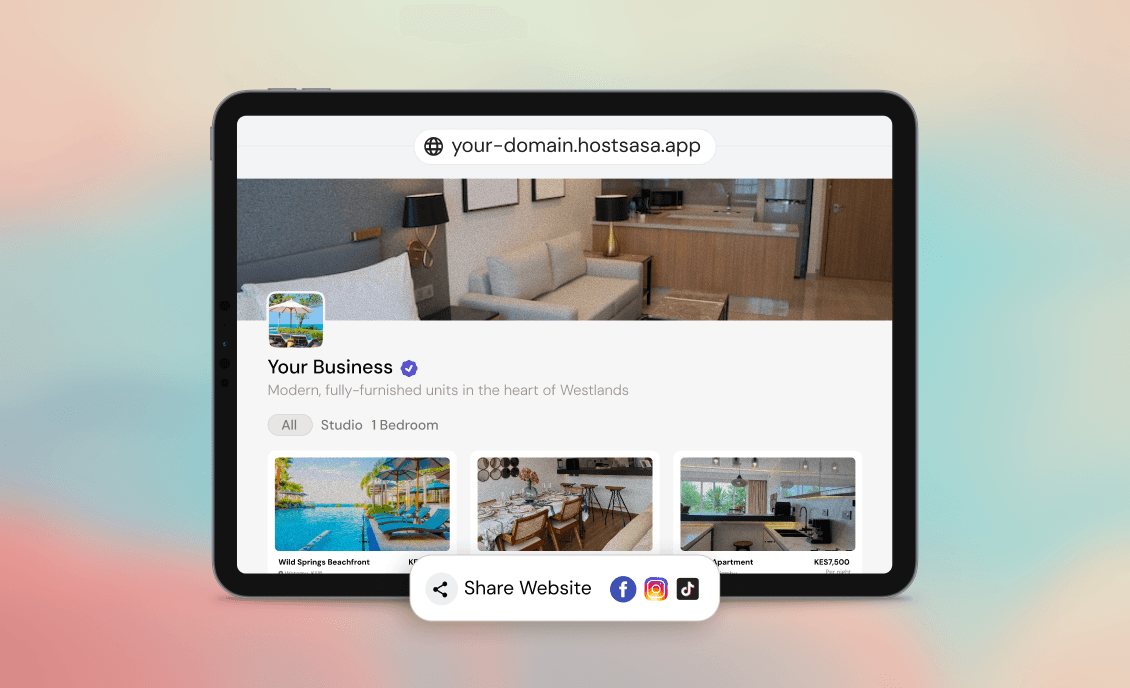
Why should Kenyan hosts have their own booking website?
Most hosts already have somewhere they market their properties.
The challenge is what happens after someone becomes interested.
Social media is built for discovery.
A booking website is built for conversion.
Someone can see your TikTok video and then visit your website to check the actual units.
Someone can find your Instagram page and click your booking link.
Someone can receive your website link on WhatsApp.
That creates a simple path from interest to reservation.
Your website becomes your booking link
Imagine a guest asks:
"Do you have any two bedroom apartments available this weekend?"
Instead of sending five messages you can send your booking link.
The guest can browse the available units and select the dates.
They can then submit a reservation request.
You receive the request and decide whether to accept or reject it.
The guest receives the result.
The process is much easier to follow.
A booking website does not replace WhatsApp
This is important for Kenyan hosts.
You do not need to stop using WhatsApp.
WhatsApp is still one of the easiest ways to communicate with guests.
Your website simply handles the part that WhatsApp is not very good at: organising property information and reservations.
A simple flow can be:
Instagram → Website → Booking request → WhatsApp → Confirmation
Or:
Facebook → Website → Booking request → WhatsApp → Confirmation
Your social media pages bring the guest in.
Your website helps them make a reservation.
WhatsApp keeps the communication familiar.
What should a short-stay website include?
A useful booking website does not need hundreds of pages.
It needs the right information.
1. Your brand
The website should make it clear who the guest is booking with.
Use your business name and logo.
2. Good property photos
Guests want to see the actual space before making a reservation.
Include clear photos of:
- Bedroom
- Living room
- Kitchen
- Bathroom
- Exterior
- Common areas
- Views
- Amenities
3. Clear unit information
Tell guests what they are booking.
Include:
- Unit type
- Number of bedrooms
- Beds
- Bathrooms
- Maximum guests
- Amenities
- House rules
4. Location
Give guests enough information to understand where the property is.
You can include the address plus useful details such as:
Opposite Quickmart supermarket
or:
2nd floor, Room 302
5. Availability
Guests should be able to check whether the unit is available for their dates.
This reduces unnecessary back-and-forth.
6. Reservation process
Make it obvious what the guest needs to do to request a booking.
Your booking website should be mobile friendly
This is especially important because much of your traffic may come from WhatsApp, Instagram, Facebook and TikTok.
Those users are likely to open your website from their phones.
A guest should not have to pinch and zoom to find the booking button.
The important information should be easy to find:
Property → Unit → Availability → Reservation
Keep the process simple.
What happens after a guest requests a booking?
This is where the website should connect to your booking workflow.
For example:
- Guest selects a unit.
- Guest selects their dates.
- Guest submits their details.
- Host receives the booking request.
- Host accepts or rejects the request.
- Guest receives the result on WhatsApp.
- The booking is recorded in the dashboard.
This means the website is not just a digital brochure.
It becomes part of your booking operation.
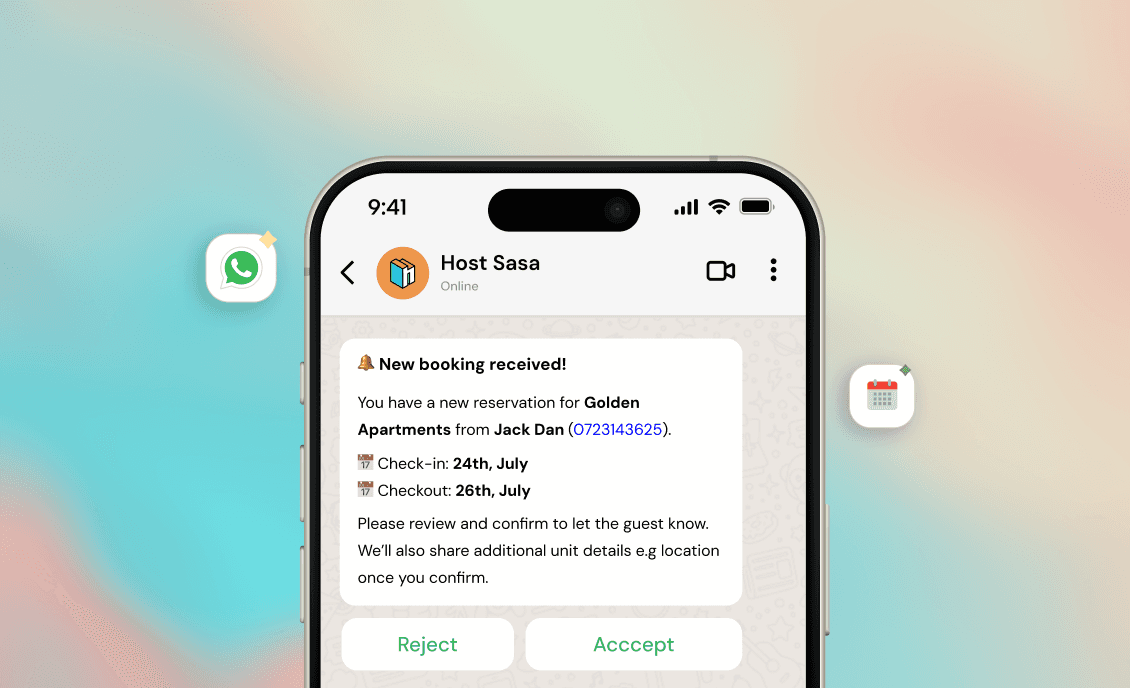
Your website can also help with bookings you receive elsewhere
A direct booking website does not mean every booking has to come through the website.
You will still receive bookings through:
- TikTok
- Phone calls
- Returning guests
- Referrals
Those bookings can be manually added to your booking system.
That way your availability remains accurate even when the booking happened outside the website.
Why this matters when you have multiple units
Managing one apartment manually may be manageable.
Managing five units is different.
You need to know which unit is occupied.
You need to know which dates are available.
You need to know which guest is arriving.
You need to know which unit needs cleaning.
You need to know which bookings are pending.
A booking website combined with a management dashboard gives you one place to keep track of this information.
Your website can become your main booking link
Once your website is live you can put it everywhere.
Add it to your:
- Instagram bio
- Facebook page
- TikTok profile
- WhatsApp Business profile
- Google Business Profile
- Email signature
- Business cards
You can also send it directly to previous guests.
Over time your website becomes an asset for your business rather than depending entirely on a social media profile.
How to get started
You do not need to know how to code to have a direct booking website.
With Host Sasa you can create your account, add your business details, upload your units and publish a branded booking website.
Your website can use your business name, logo, banner and property information.
Guests can then browse your units, check availability and request reservations.
You manage the bookings from one dashboard while keeping WhatsApp as part of the communication process.
A direct booking website is worth having
If you are already spending time promoting your short-stay properties on social media you already have the traffic.
The next step is giving that traffic somewhere useful to go.
A direct booking website gives your guests a clear place to browse your properties and request a reservation.
It also gives you a more organised way to manage those bookings.
For a growing short-stay business in Kenya that can make the difference between managing bookings from your phone and running them from a proper system.
More Articles
Managing Airbnb and Short-Stay Bookings From WhatsApp: A Better Way for Kenyan Hosts
Learn how Kenyan Airbnb and short-stay hosts can organise bookings from WhatsApp, Instagram, Facebook and TikTok without losing track of reservations.
August 15, 2026
How to Automate Checkout and Cleaner Reminders for Your Short-Stay Business
Learn how automated checkout and cleaner reminders can help Kenyan Airbnb and short-stay hosts reduce follow-ups and keep units ready for the next guest.
July 20, 2026